At Flourishing Future Wellness, we provide compassionate mental health care tailored to your needs, specializing in Borderline Personality Disorder (BPD), Post Traumatic Stress Disorder (PTSD), and transitions from inpatient or crisis.
Compassionate Mental Health

Telehealth in Michigan
Aetna | Priority Health | McLaren | Meridian | Molina | Optum | ASR | BCC | BCBS | Self-Pay | Open Path
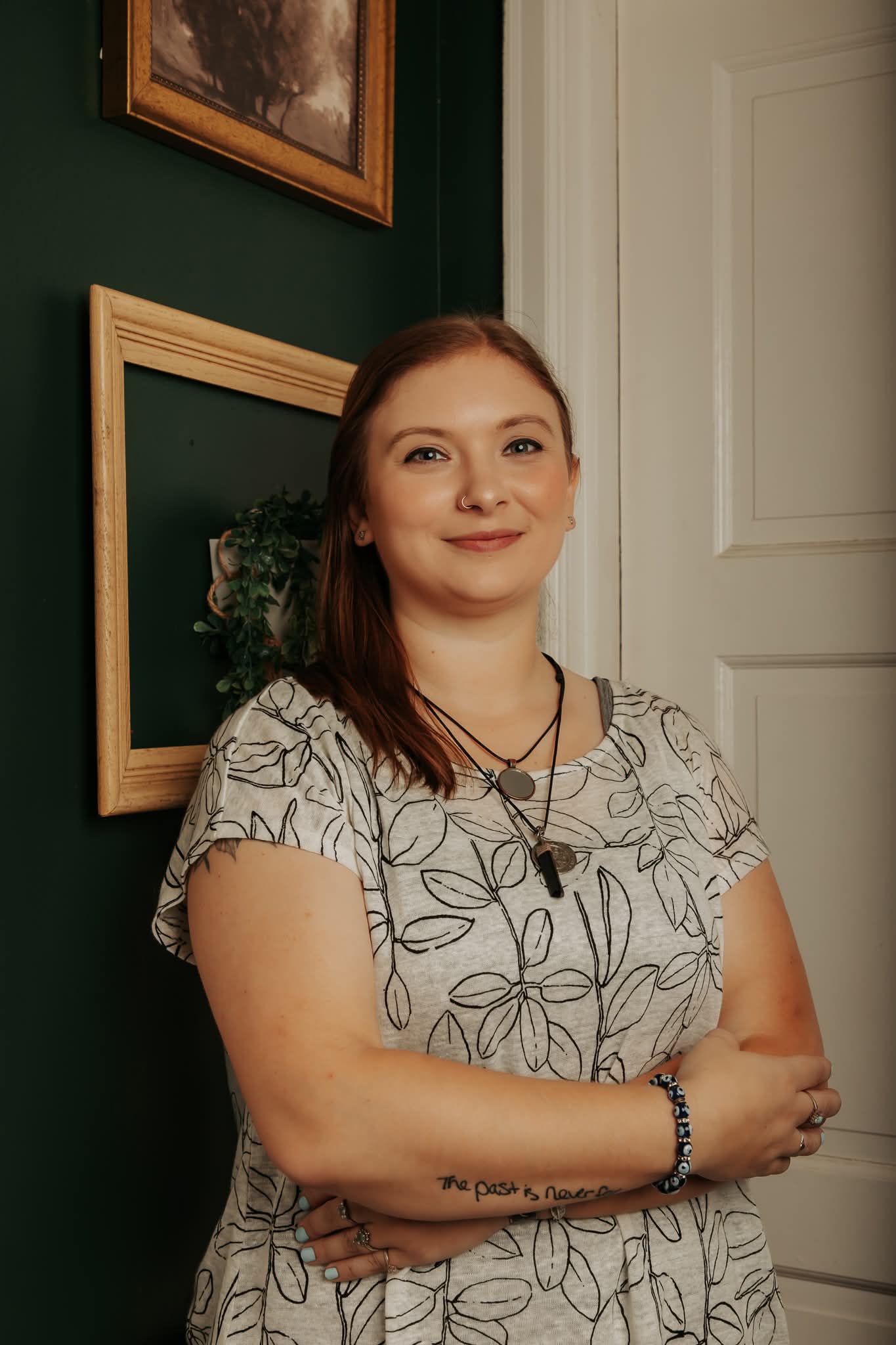
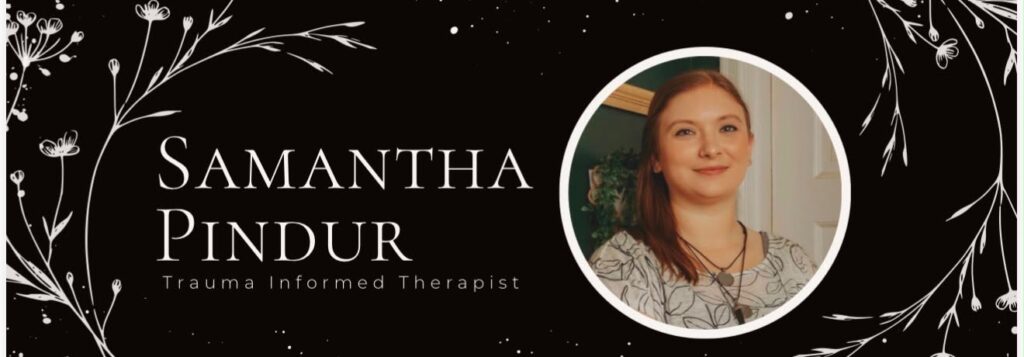
Meet Samantha Pindur, MA, LLC, NCC
Healing begins with a sense of safety—within yourself, within your body, and within your inner world. From that place, growth becomes possible.
I am a Provisionally Licensed Professional Counselor (PLPC) and National Certified Counselor (NCC) with experience across inpatient psychiatric, crisis, substance use, and outpatient settings. I have worked alongside people navigating trauma, suicidality, self-harm, psychosis, substance use, severe emotional distress, and transitions between higher levels of care and everyday life.
I have a particular interest in working with individuals who have had difficult or invalidating experiences with the mental health system. If you have ever felt misunderstood, dismissed, over-pathologized, or reduced to a diagnosis, I want therapy to be a place where you can feel heard, respected, and able to maintain your sense of autonomy. I believe people deserve curiosity and compassion, especially when their experiences are complex.
My work is trauma-informed and person-centered, with experience supporting complex trauma, PTSD, dissociation, personality disorders, psychotic disorders, substance use, and co-occurring mental health concerns. I am comfortable sitting with difficult emotions, complicated histories, grief, anger, self-harm, suicidal thoughts, paranoia, hallucinations, and experiences that may feel difficult to explain.
A particular area of interest for me is OCD, including intrusive and taboo themes that can be incredibly difficult to talk about. This may include unwanted thoughts involving harm, sexuality, relationships, morality, religion, identity, or other topics that feel frightening or completely inconsistent with who you are. My goal is to create a space where you can discuss these experiences without shame or judgment while learning to understand the OCD cycle and your relationship with intrusive thoughts.
Diagnostic work has deepened my appreciation for the complexity of mental health. I approach assessment with curiosity and collaboration. A diagnosis can provide useful language, but it should never become the entirety of who you are. Sometimes understanding what is happening beneath the surface can be the first step toward feeling less alone.
My approach integrates DBT, somatic practices, Solution-Focused Brief Therapy, and a person-centered foundation. I believe you are the expert on your own experience, even when that experience feels confusing or disconnected. Therapy can be a place to slow things down, understand patterns, develop practical tools, and build responses that feel more intentional rather than driven by survival.
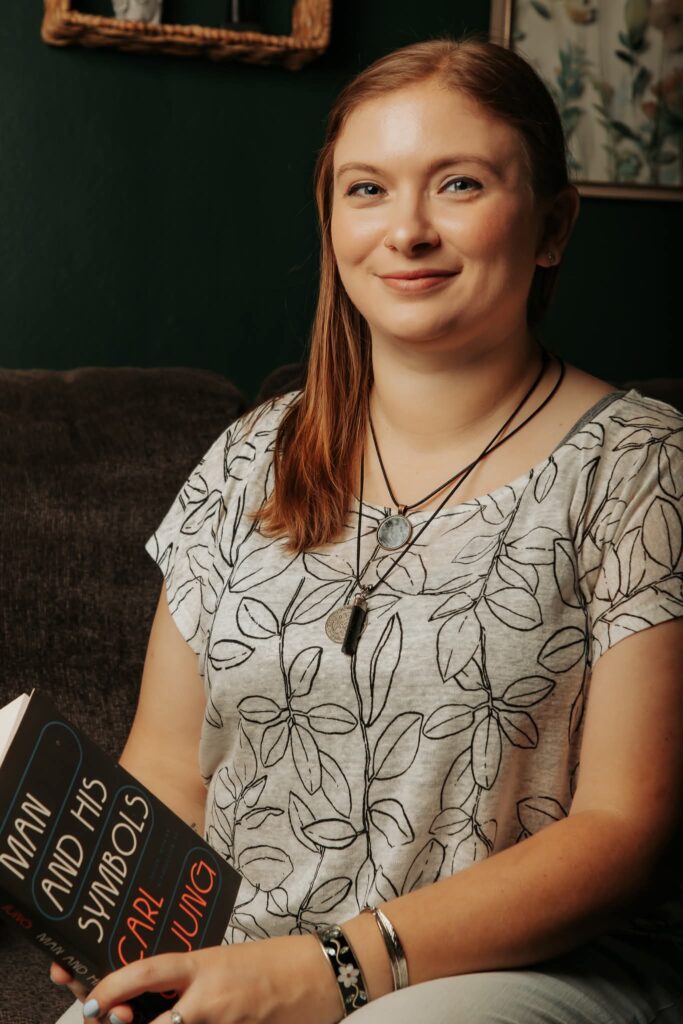
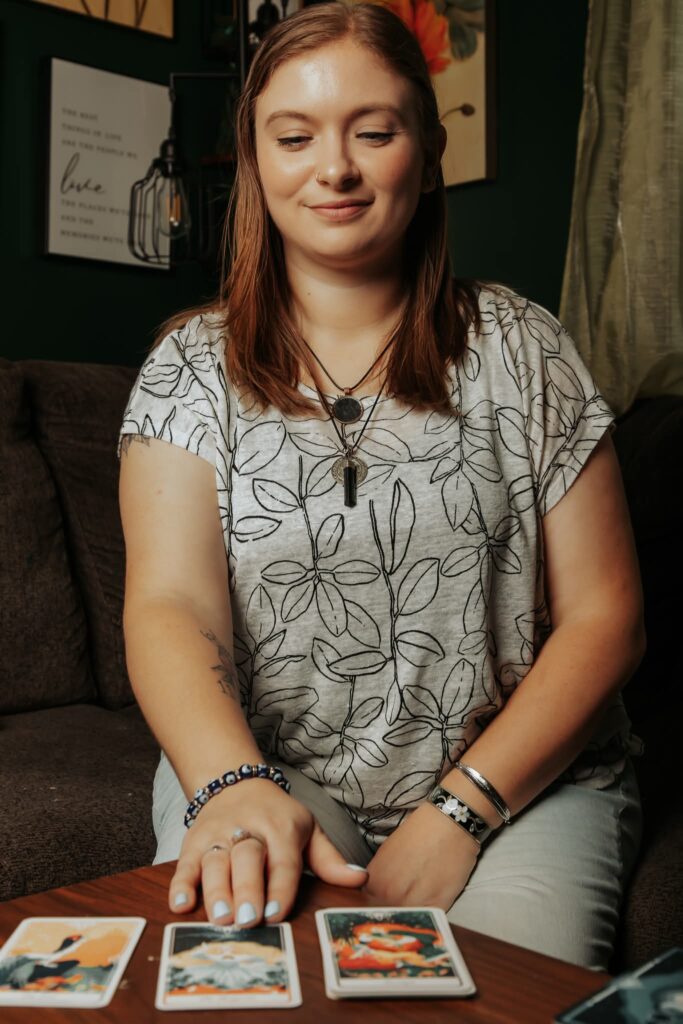
For clients who are drawn to it, tarot can be incorporated as a client-led reflective tool for insight and self-exploration. It is used alongside—not instead of—clinical care.
Above all, I believe healing is not about becoming someone entirely new. It is about reconnecting with the parts of yourself that may have become buried beneath trauma, fear, grief, symptoms, and the patterns that once helped you survive.
You are not your diagnosis. You are not your intrusive thoughts. And you are not the worst thing that has happened to you. You are a whole person—and therapy can be a place to begin feeling like yourself again.


Dialectical Behavior Therapy (DBT)
DBT builds skills in emotional regulation, distress tolerance, mindfulness, and communication. It supports balance between acceptance and change, helping you manage intense emotions without losing connection to yourself or others.
Somatic Therapy
Somatic Therapy focuses on the mind-body connection. It helps you notice physical sensations that reflect emotional states and release tension held in the body. This approach supports healing through awareness, movement, and grounded presence.
Internal Family Systems (IFS)
IFS invites you to understand and connect with different parts of yourself. Especially the ones that feel reactive, shut down, or stuck. The goal is not to get rid of these parts. It is to build internal trust and self-leadership.
Solution-Focused Brief Therapy (SFBT)
SFBT emphasizes solutions rather than problems. Together, we identify what is already working and build from your strengths. This approach helps create practical steps toward meaningful change by focusing on possibilities instead of limitations.
Person-Centered Therapy
Person-Centered Therapy centers on trust, choice, and your unique process. You set the pace. I provide a space where you are seen without judgment and where your experience guides the work.
Exposure and Response Prevention
ERP is a specialized behavioral treatment for OCD. It helps clients gradually approach feared thoughts, situations, sensations, and uncertainty while reducing compulsions and avoidance.
Treatment focuses on changing the cycle that strengthens OCD. Exposures are planned collaboratively and adjusted based on your presentation, goals, and readiness.
Inference-Based Cognitive Behavioral Therapy
I-CBT focuses on the inferential reasoning that produces obsessive doubt. It helps clients identify when OCD has replaced direct evidence with an imagined possibility and strengthen trust in present-moment information.
This can be particularly helpful when compulsions involve rumination, mental review, checking, or repeated attempts to determine whether a feared possibility is true.
Empowering Your Journey
Flourishing Future Wellness Since 2024
Samantha Pindur, MA, LLC, NCC
Samantha@flourishingfuturewellness.com
989-331-0586
Limited Licensed Counselor Michigan / 6451023341
Supervised by John Sullivan (Michigan / 6401019176)